Laksa — A Structure-Aware Model for Code Generation
Date
Category
Web Design

Problem
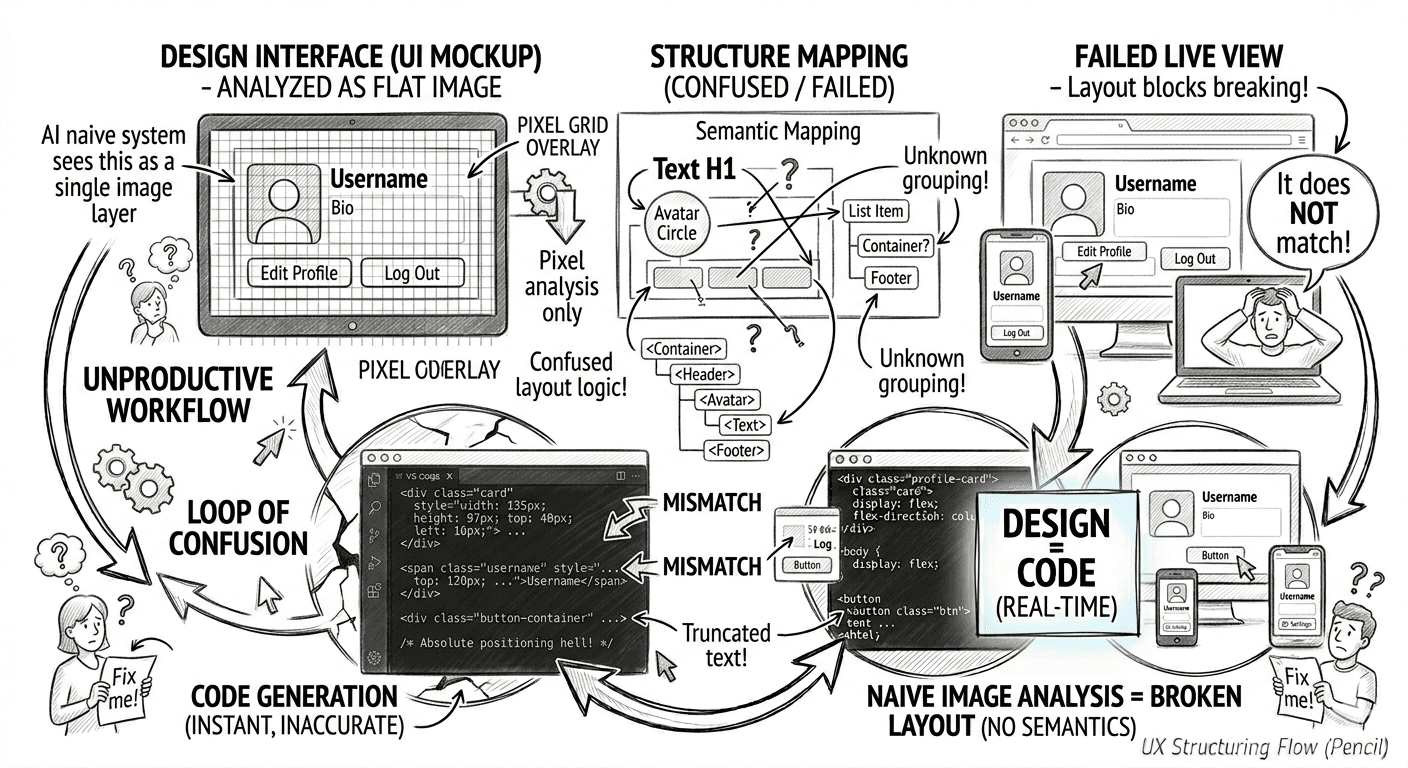
Most AI-based code generation systems today rely heavily on visual interpretation.
They process:
Screenshots
Rendered UI
Pixel-level patterns
While this approach works for simple outputs, it introduces major limitations:
Loss of layout structure
Inconsistent hierarchy
Poor scalability
Code that looks correct, but isn’t logically structured
These systems attempt to generate code from appearance, not intent.
Observation
Design is not just visual — it is inherently structured.
Every interface is built from:
Layers
Components
Vectors
Layout relationships
The structure already contains the logic required to generate code.
Limitation of Visual AI Models
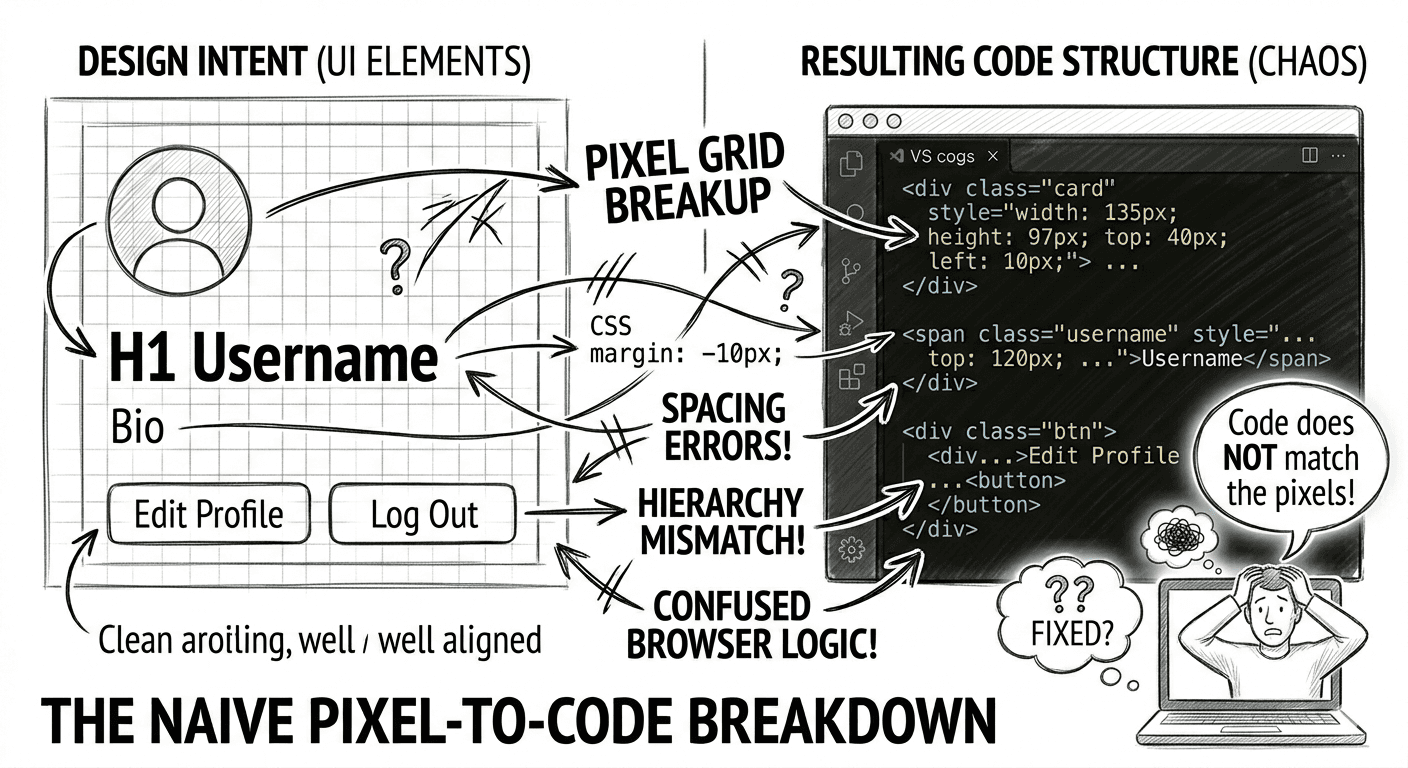
Visual-based models:
Approximate layouts
Guess spacing and alignment
Reconstruct hierarchy indirectly
This leads to:
Visually correct UI ≠ Structurally correct code.
Design Opportunity
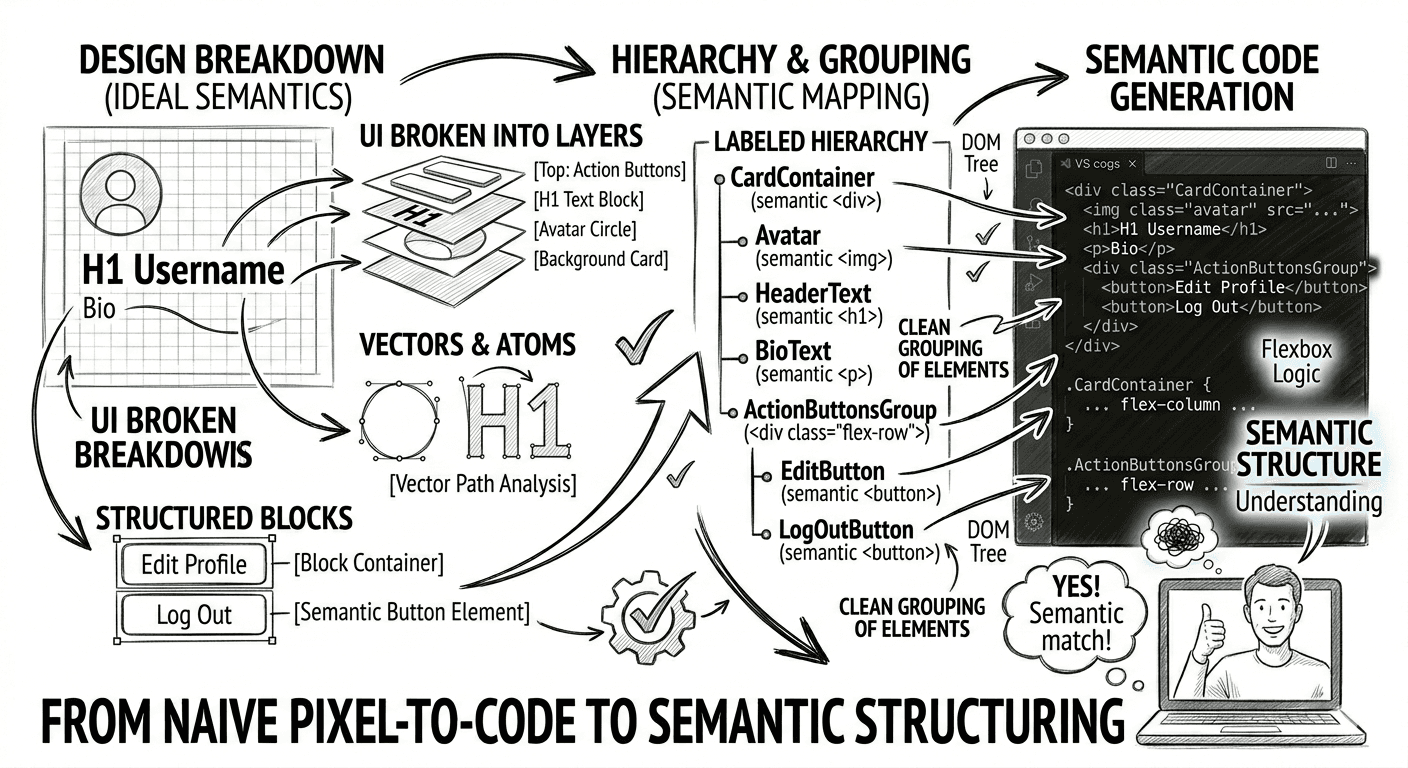
Instead of generating code from pixels, there is an opportunity to build an AI system that:
Understands design at the layer and vector level, and generates code from that structure.
Concept — Laksa
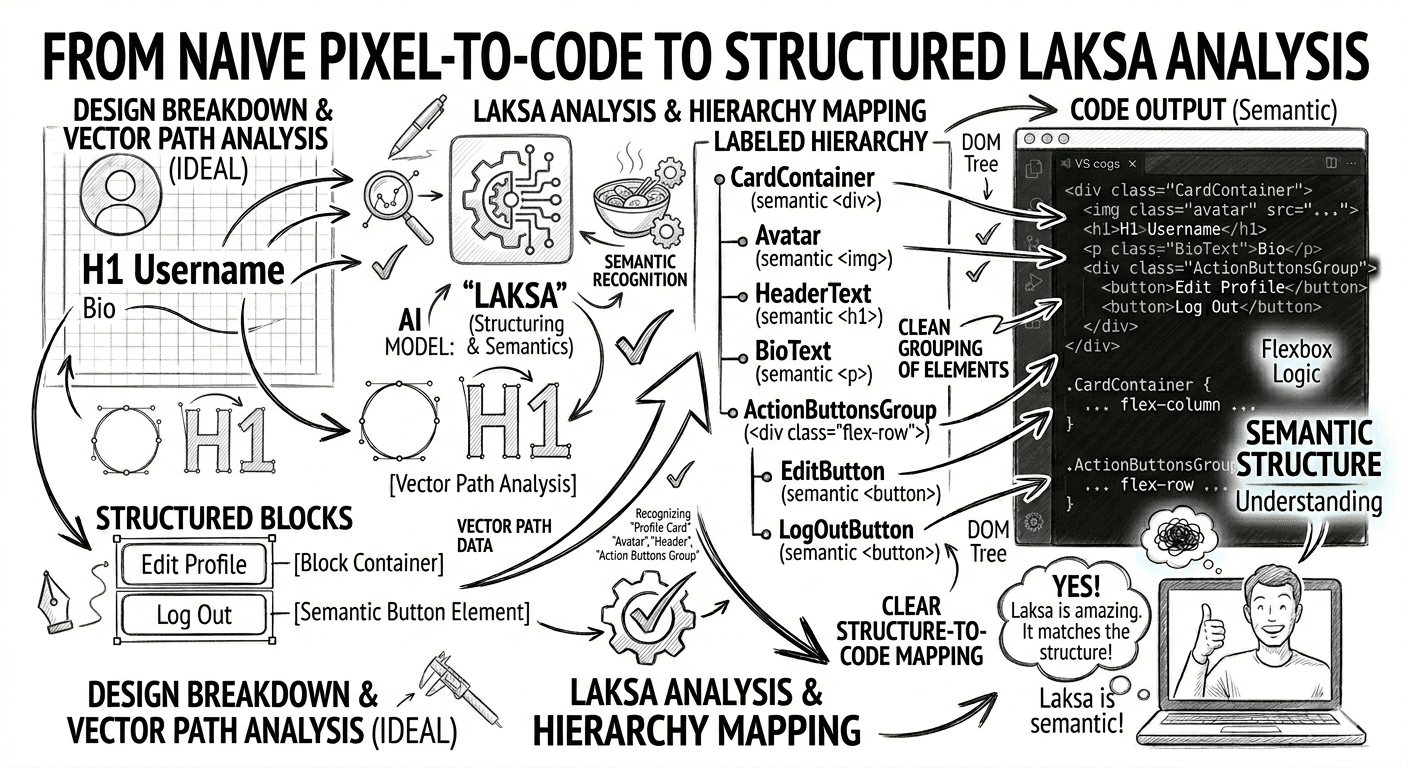
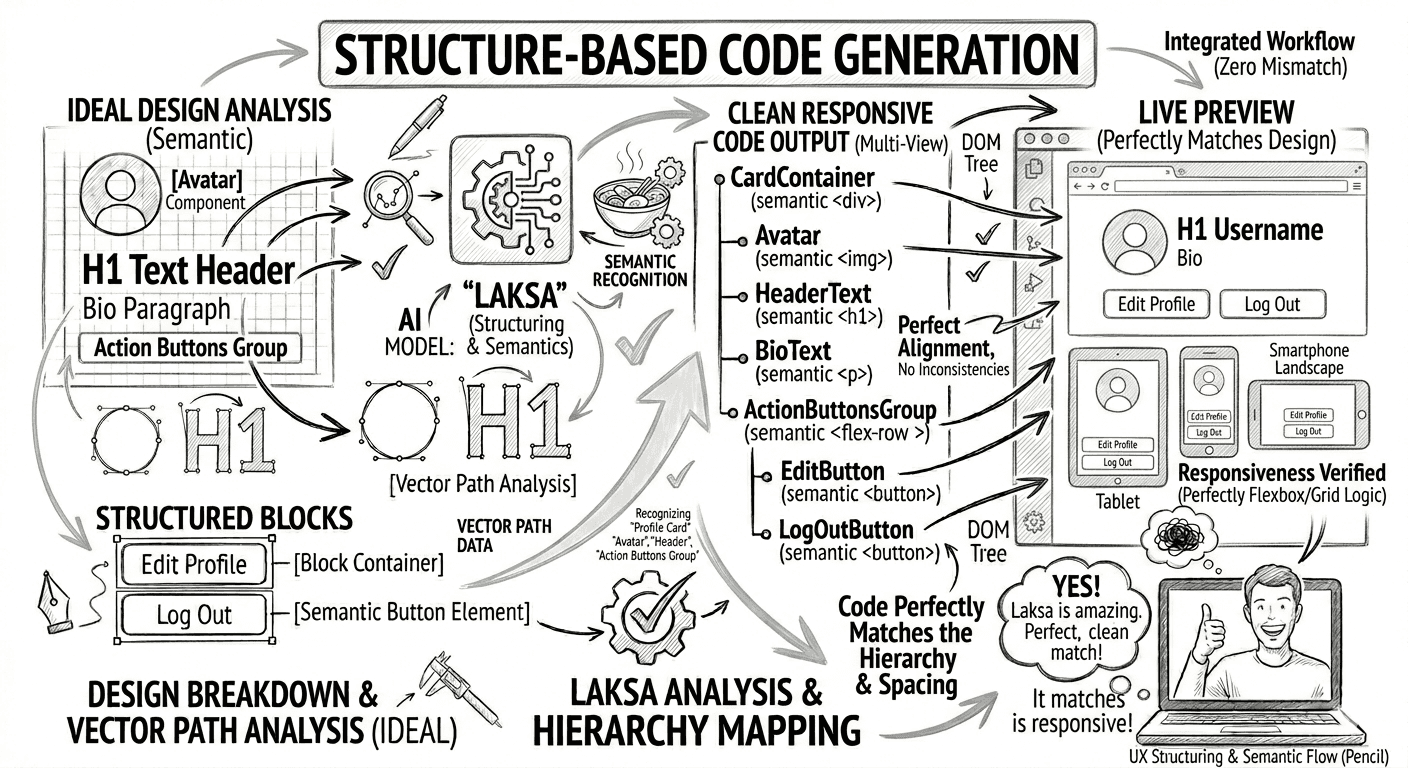
Laksa is an AI model designed to generate frontend code by understanding design structure, not visuals.
It works as a structural intelligence layer, capable of interpreting:
Layer hierarchy
Component relationships
Spacing and alignment systems
Vector-based layouts
How It Works
Laksa operates on structured design data:
Reads layers and vector elements
Identifies layout systems (grid, flex, stacking)
Understands grouping and nesting
Maps structure directly to code
Code is generated from design logic, not pixel approximation.
Core Shift
Laksa introduces a fundamental shift:
Traditional AI | Laksa |
|---|---|
Image-based interpretation | Structure-based understanding |
Pixel approximation | Logical mapping |
Visual accuracy | Structural accuracy |
Why This Matters
This approach enables:
Cleaner, maintainable code
Accurate layout translation
Better responsiveness
Scalable component systems
Reduced ambiguity between design and development.
Relationship with Pixel to Code
Laksa acts as the intelligence engine behind Pixel to Code.
Pixel to Code → Design platform
Laksa → Structural AI model powering code generation
Together, they create a system where design and code are continuously connected.
Insight
The future of AI in design is not about seeing pixels —
it’s about understanding structure.
Closing Thought
Laksa explores a new direction for AI-driven development —
where code is not generated from how interfaces look,
but from how they are built.