Pixel to Code — Designing Where Creation Meets Implementation
Date
Category
Product Design

Problem
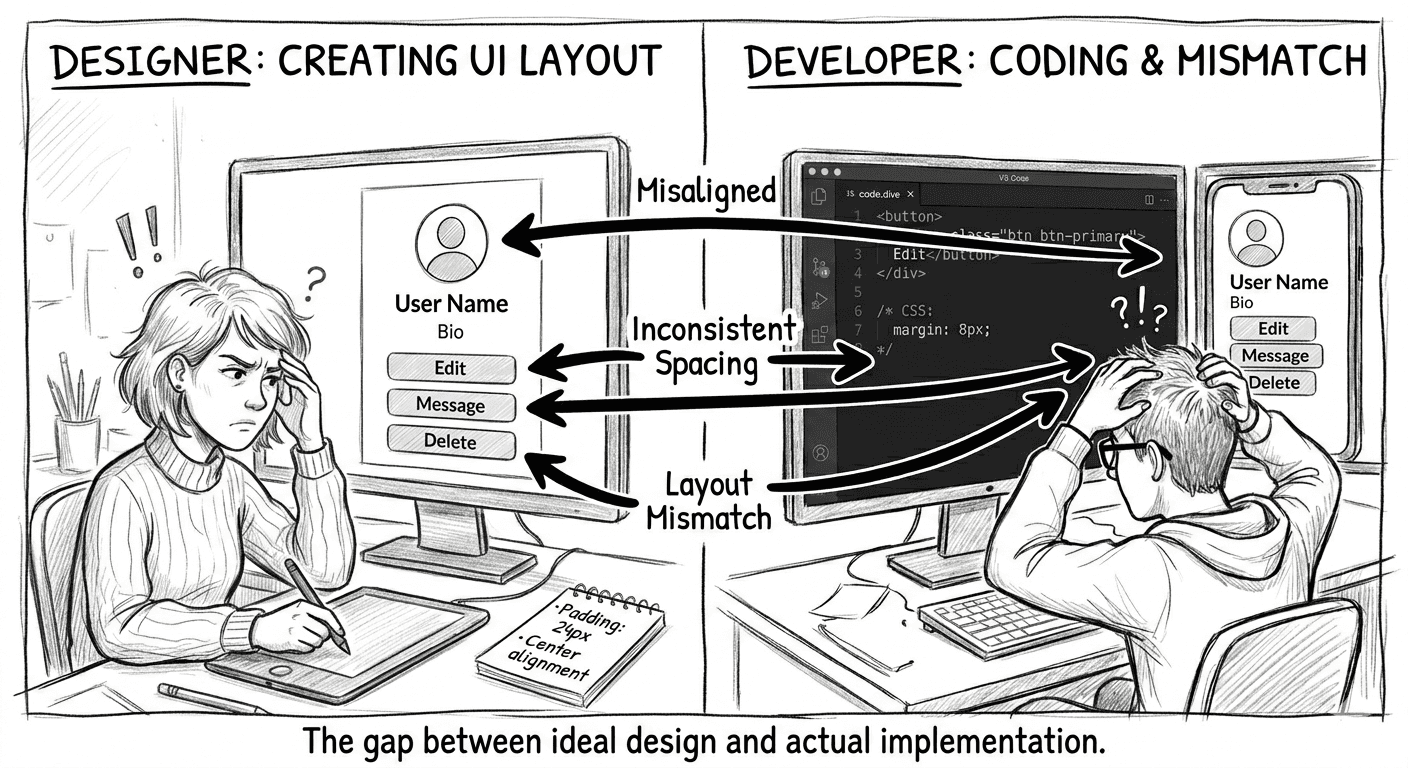
In modern product development, design and development are closely connected — yet the transition between them remains inefficient.
Designs are created with precision in tools like Figma, but translating them into working code introduces friction:
Layouts are manually rebuilt
Spacing and alignment inconsistencies appear
Responsiveness is reinterpreted differently
Continuous back-and-forth between designers and developers
The issue is not in design or development — but in the translation layer between them.
Observation
Design tools define structure visually, while code requires structured logic.
This creates a fundamental gap:
Visual intention ≠ Code implementation
Even with design systems, the process still depends heavily on manual interpretation.
Limitation of Existing Approaches
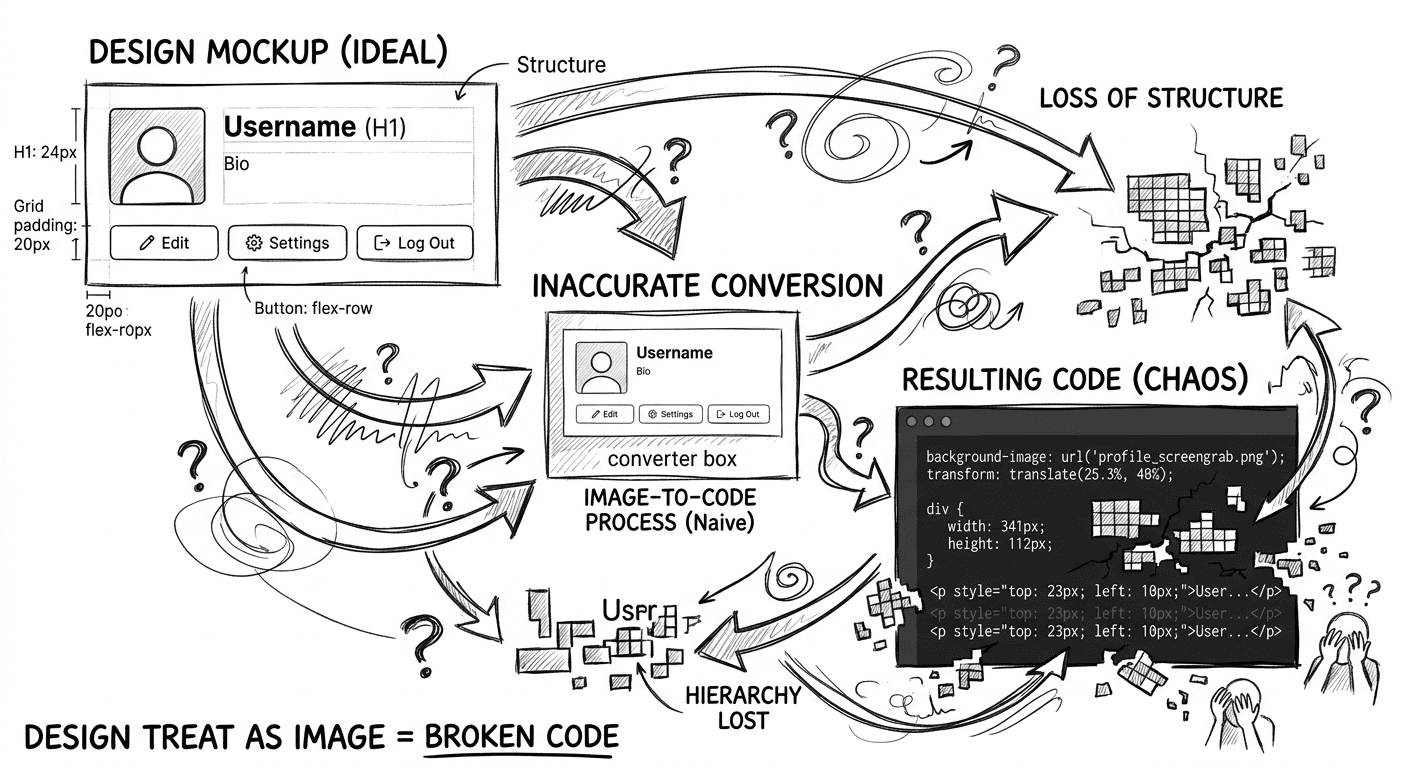
Most existing design-to-code tools attempt to solve this problem by converting designs into code.
However, many of these systems rely on image-based interpretation — treating designs as visual outputs rather than structured systems.
This leads to:
Loss of layout hierarchy
Inconsistent spacing and alignment
Poor responsiveness
Code that reflects appearance, not structure
These systems attempt to reconstruct logic from pixels.
Design Opportunity
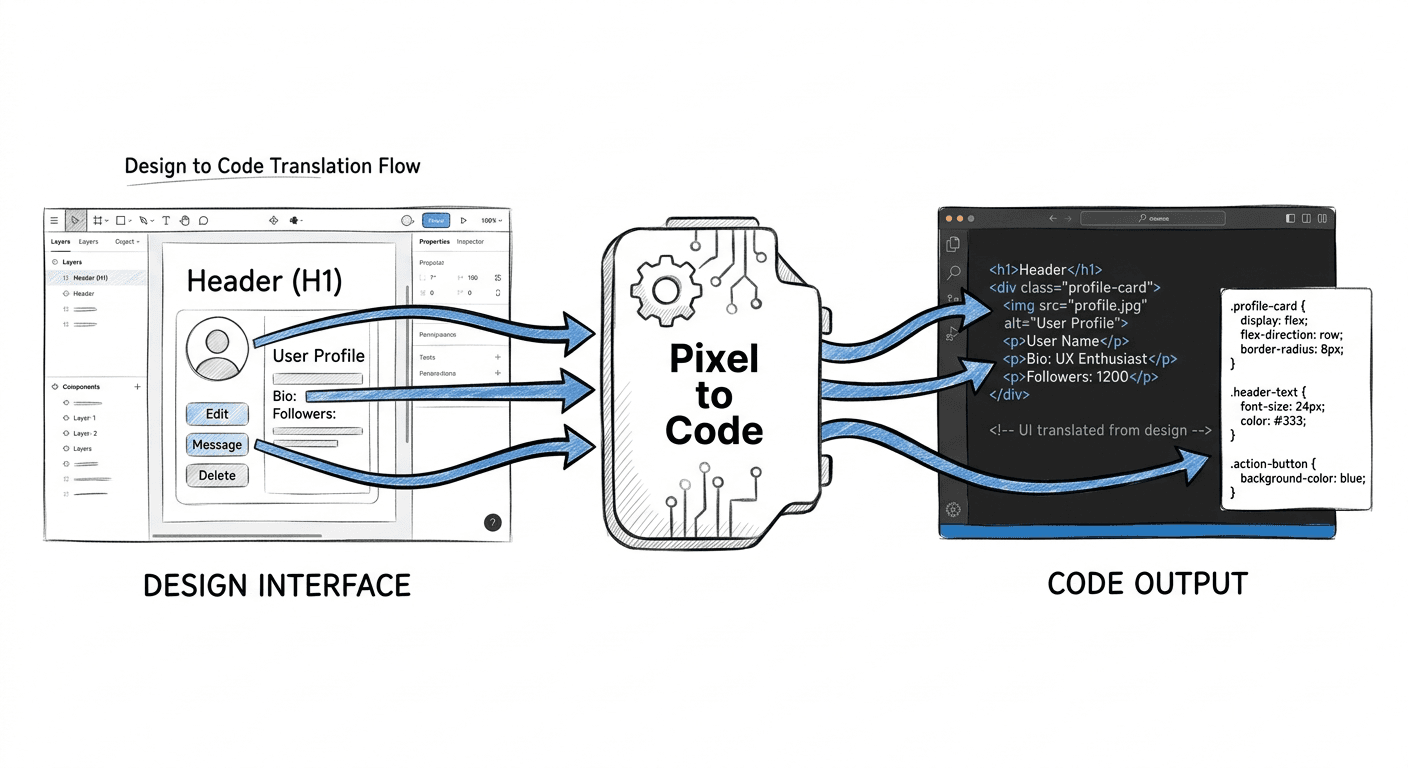
Instead of treating design and development as separate stages, there is an opportunity to rethink design as a system that inherently produces code.
Concept — Pixel to Code
Pixel to Code (P2C) is not just a tool that converts designs into code.
It is a design platform where creation and implementation happen simultaneously.
Users can:
Design interfaces
Structure layouts
And instantly receive corresponding frontend code
Without a separate translation or rendering step.
Core System Thinking
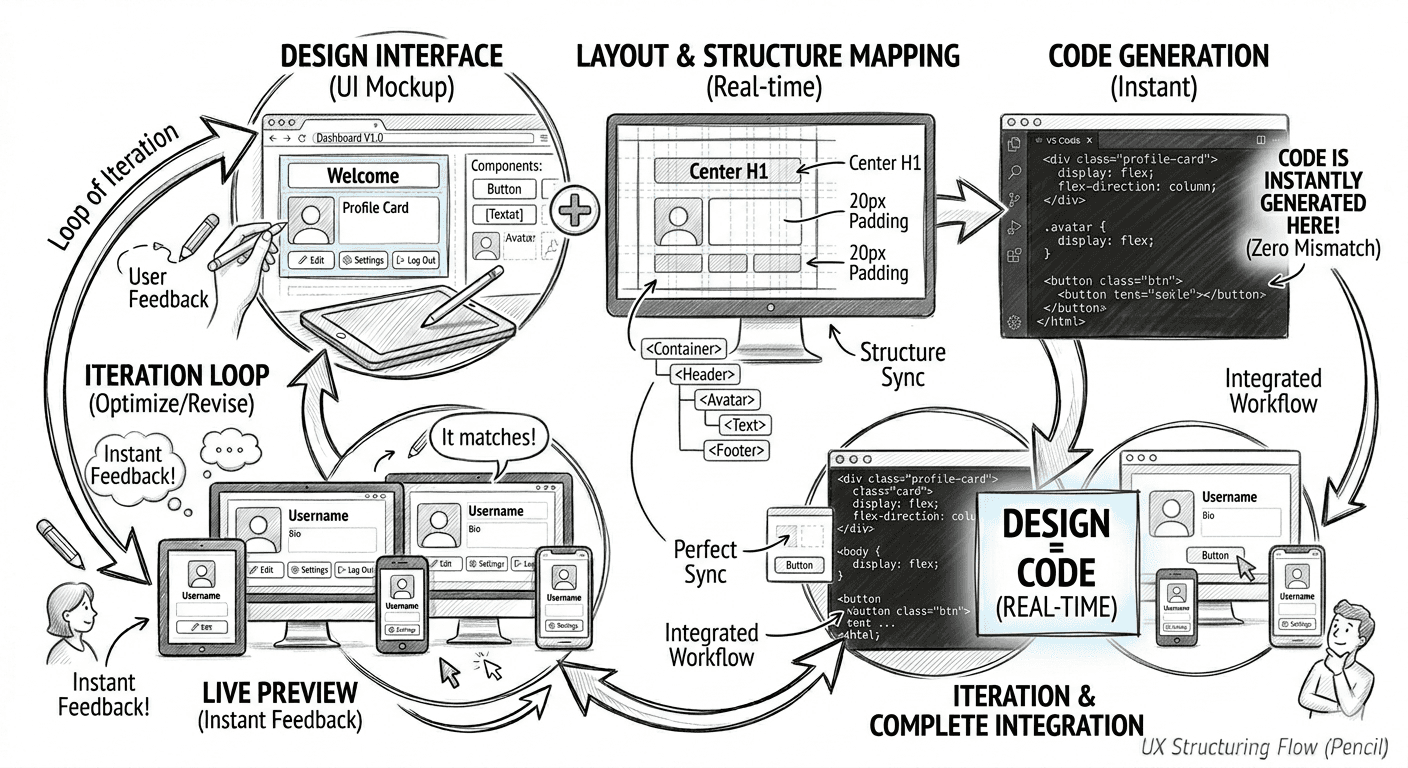
P2C introduces a continuous loop:
Design = Code (Real-time)
Instead of:
Design → Handoff → Development
The system becomes:
Design ↔ Code (continuous sync)
System Flow
Design Interface
Layout Understanding Engine
Structure Mapping
Code Generation
Live Preview
Iteration Loop
All connected in a continuous cycle.
How It Works
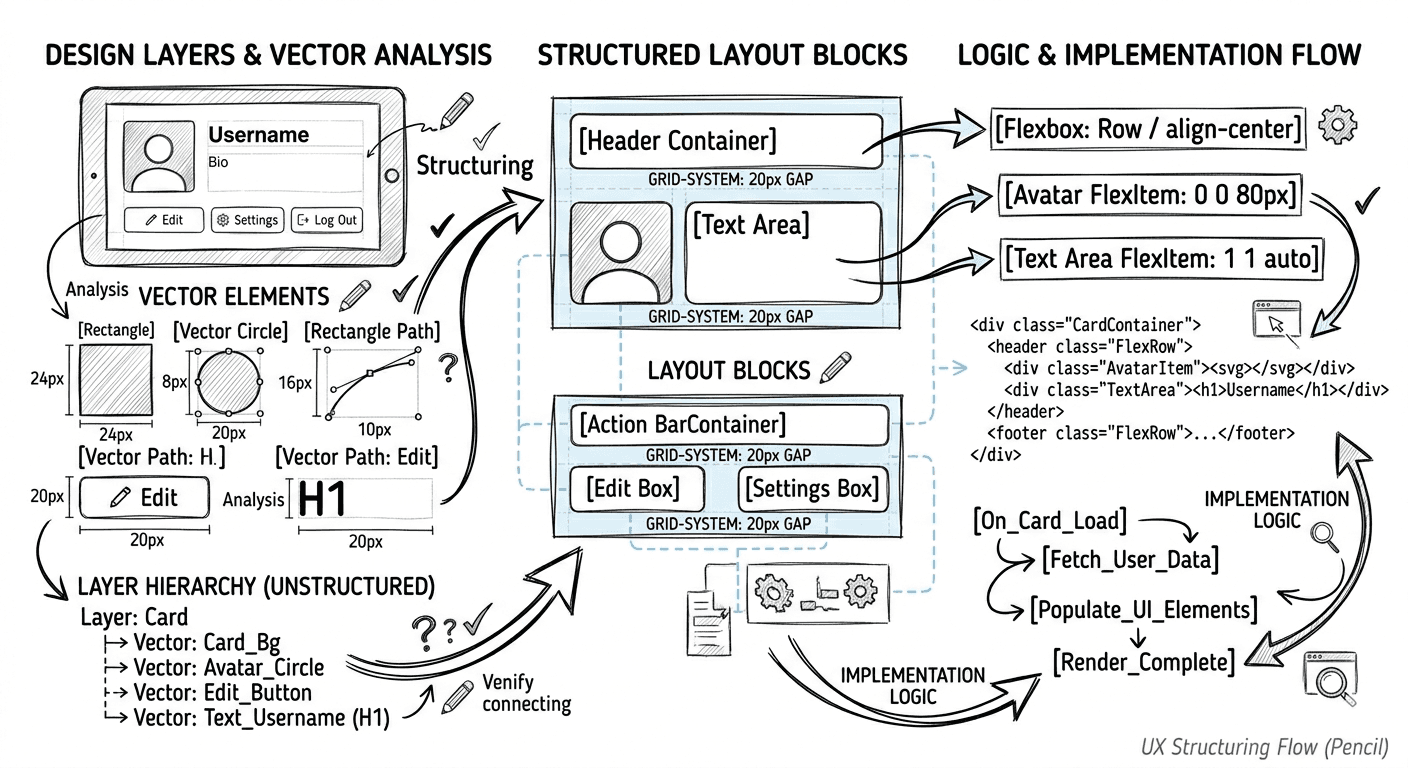
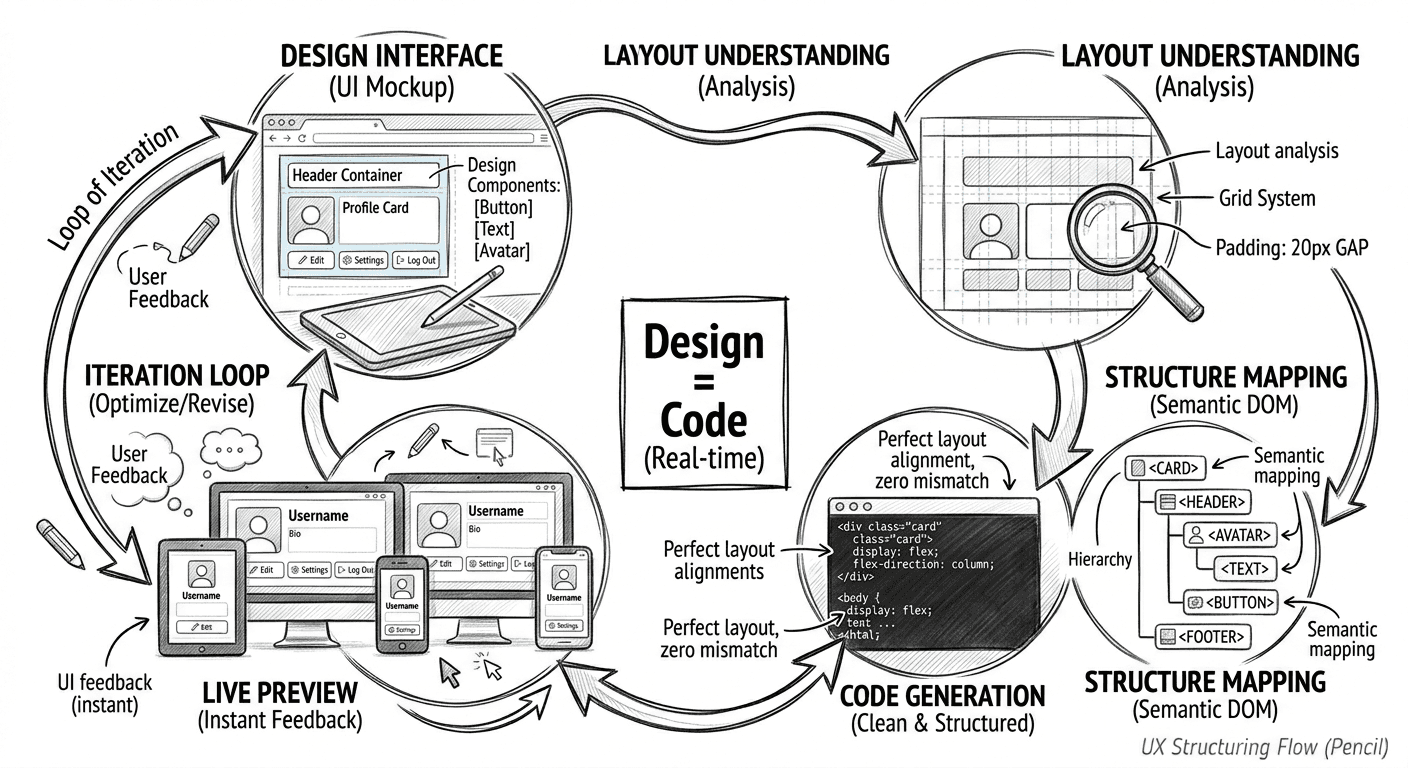
Unlike image-based systems, Pixel to Code operates on structure-first logic:
Analyzes layers and vector elements
Understands layout relationships and hierarchy
Interprets spacing, grouping, and alignment
Converts structured design data directly into code
Code is generated from design logic, not visual approximation.
Key Difference
Approach | Output |
|---|---|
Image-based generation | Visual approximation |
Structure-based generation (P2C) | Logical, scalable code |
Why This Matters
This shift enables:
Accurate layout translation
Better responsiveness across devices
Reduced design-development gaps
Faster product iteration cycles
More system-oriented design thinking
Insight
Design is not just visual output — it is structured information.
When systems understand that structure, code becomes a natural outcome of design.
Closing Thought
Pixel to Code explores a future where design tools are no longer separate from development —
but are part of a unified system where creation and implementation happen together.

